
A Loyalty Programme Without Measurement Is Just a Discount
Points and rewards are easy to launch and hard to justify. What actually changes patient behaviour, how to credit a referral properly, and how to prove the programme pays before you expand it.
Published
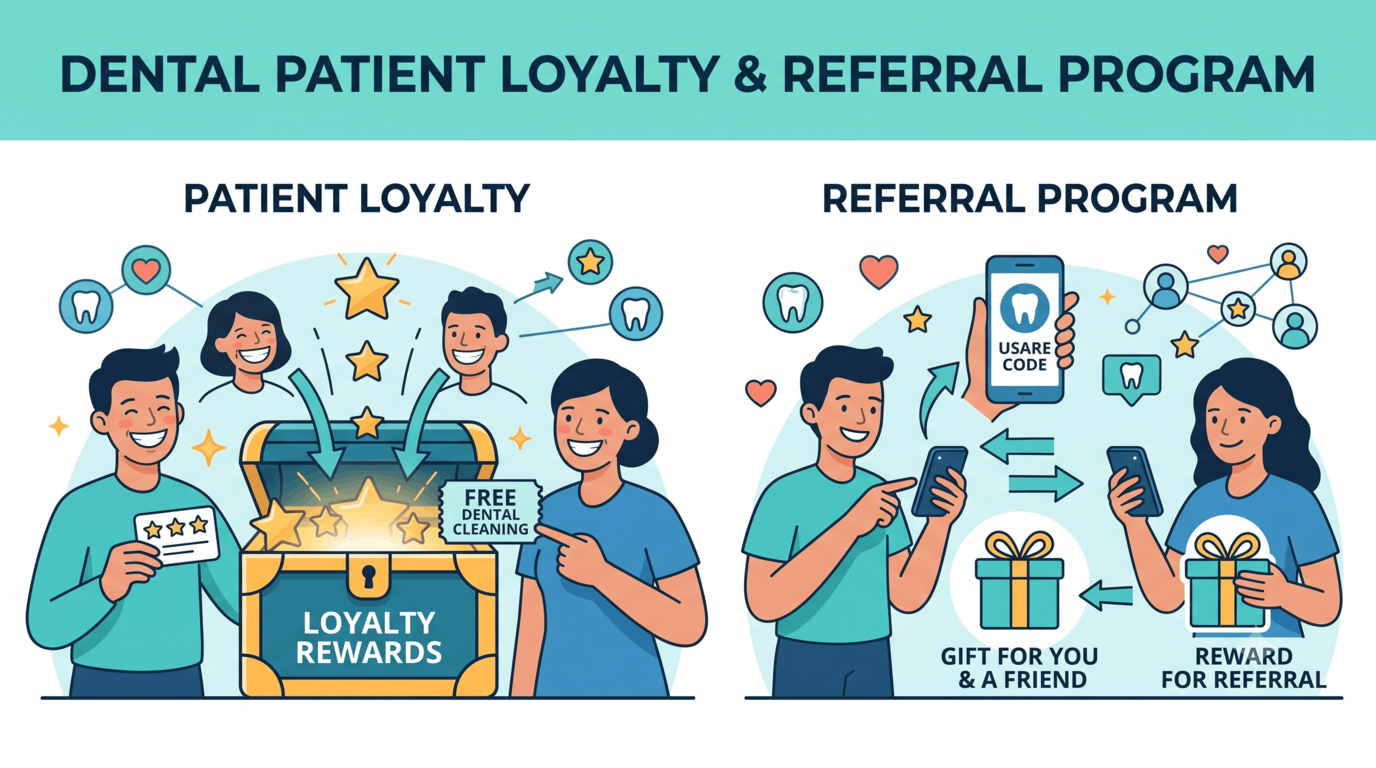
Loyalty programmes are easy to launch and unusually hard to justify afterwards. Points get awarded, a few rewards get redeemed, everyone agrees it seems positive, and nobody can say whether it made money.
That is not a reason to avoid them. Retention is genuinely cheaper than acquisition, and a patient who already trusts you is the most likely source of your next patient. But a programme that is never measured drifts into being a discount with extra administration — you give margin away to people who would have come anyway.
Reward the behaviour, not the spend
The most consequential design decision is what earns points. Most clinics default to spending, because it is easy to calculate. It is usually the wrong choice.
Rewarding spend nudges patients toward more expensive treatment. In retail that is the point; in a clinical setting it sits badly — it invites the patient to wonder whether a recommendation was clinical or commercial, and that doubt is expensive in a way no programme repays.
Rewarding behaviour avoids the problem entirely and targets what actually makes a practice healthy:
- Attending a scheduled appointment — directly attacks your no-show rate.
- Coming in for a recall on time — the single strongest predictor of long-term patient value.
- Completing an accepted treatment plan rather than abandoning it halfway.
- Referring someone who attends.
None of those push a patient toward treatment they do not need, and all of them are worth real money to the clinic.
Referrals: credit them properly or don't run them
Referral schemes fail for mundane reasons rather than conceptual ones.
Credit on attendance, not enquiry. Crediting when someone enquires invites gaming and rewards activity rather than value. Crediting when the referred patient actually attends ties the reward to something real.
Credit automatically. If claiming a referral requires the patient to remind reception, most will not bother, and the ones who do will occasionally be told there is no record of it. That conversation costs more goodwill than the reward was worth.
Tell them it was credited. An acknowledged referral is likely to happen again; an unacknowledged one rarely does. This is the step clinics skip most often, and it is the cheapest part of the whole programme.
Track who refers. A small number of patients typically generate most referrals. Knowing who they are is worth more than the scheme itself.
Tiers, expiry and the fine print
Two mechanics cause most of the friction:
Tiers work when they are achievable and visible. A tier nobody reaches is decoration, and a tier the patient cannot see their progress toward has no motivational effect at all.
Expiry is where goodwill goes to die. Points that expire silently and are discovered at redemption produce exactly the conversation you built the programme to avoid. If points expire, say so at the point of earning, warn before expiry, and be generous about edge cases. The alternative is a patient who feels tricked over a sum you would happily have honoured.
Proving it pays
The comparison is not complicated, and most clinics never make it.
| Side | What to count |
|---|---|
| Cost | Value of rewards actually redeemed, plus administration |
| Return | Additional attended appointments from members vs non-members |
| Recall compliance rate, members vs non-members | |
| Revenue from referred patients who attended | |
| Retention rate difference between the two groups |
The member-versus-non-member comparison is the honest one. Total revenue from members proves nothing — your most engaged patients joined first, so they would have looked better regardless. What matters is whether behaviour changed after joining.
If the numbers do not separate, you have a discount scheme. That may still be a defensible marketing choice, but you should know which one you are running.
How PDental handles it
PDental's loyalty module sits against the patient record rather than beside it, which is what makes the measurement possible — points, tiers, rewards and redemptions are attached to the same patient whose appointments, treatments and invoices the system already holds.
Earning rules are configurable, so points can follow behaviour rather than spend. Redemption carries a full audit history, which matters more than it sounds: loyalty is one of the few modules where staff can create value out of nothing, and an audit trail is what keeps that honest. Referral tracking credits the referring patient and records the relationship, so your top referrers are a report rather than a hunch.
On proving it, there is dedicated loyalty ROI reporting alongside points expiry, tier distribution, reward redemption and a loyalty dashboard — which is what turns "it seems to be going well" into a number. Patient retention, drop-off and lifetime value reporting sit next to it, so the member-versus-non-member comparison above is available rather than theoretical.
Where to start
Do not launch tiers, referrals and rewards at once. Start with the single behaviour that costs you most today — usually recall attendance — reward it, and measure the compliance rate of members against everyone else for one quarter.
If it moves, expand. If it does not, you have learned that cheaply, and you have not yet built an administrative obligation you will be reluctant to unwind.
Frequently asked questions
Do loyalty programmes actually work for dental clinics?
They work when they reward the behaviour you want more of — attending recalls, completing accepted treatment plans, referring others — and fail when they simply discount what the patient was going to do anyway. The design decision that matters is what earns points, not how many points are earned.
Should points be awarded for spending or for behaviour?
Behaviour is usually the better lever. Rewarding spend pushes patients towards expensive treatment, which is uncomfortable in a clinical setting and easy to misread as pressure. Rewarding attendance, recall compliance and referrals encourages the things that make a practice healthy without touching clinical judgement.
How should a referral be credited?
To the patient who made it, automatically, at the moment the referred patient attends rather than when they enquire. Crediting on enquiry invites gaming; crediting on attendance ties the reward to real value. The referring patient should also be told it was credited — an unacknowledged referral rarely happens twice.
How do we know whether the programme is worth running?
Compare the cost of rewards redeemed against the revenue from the behaviour it drove — additional attended appointments, completed plans and referred patients who attended. If you cannot produce that comparison, you are running a discount scheme and calling it loyalty.