
The Five Places Dental Clinics Leak Insurance Revenue
Most insurance losses are not rejections. They are approvals that expired, procedures nobody claimed, limits nobody checked and claims nobody chased. Here is how to find each one in your own numbers.
Published
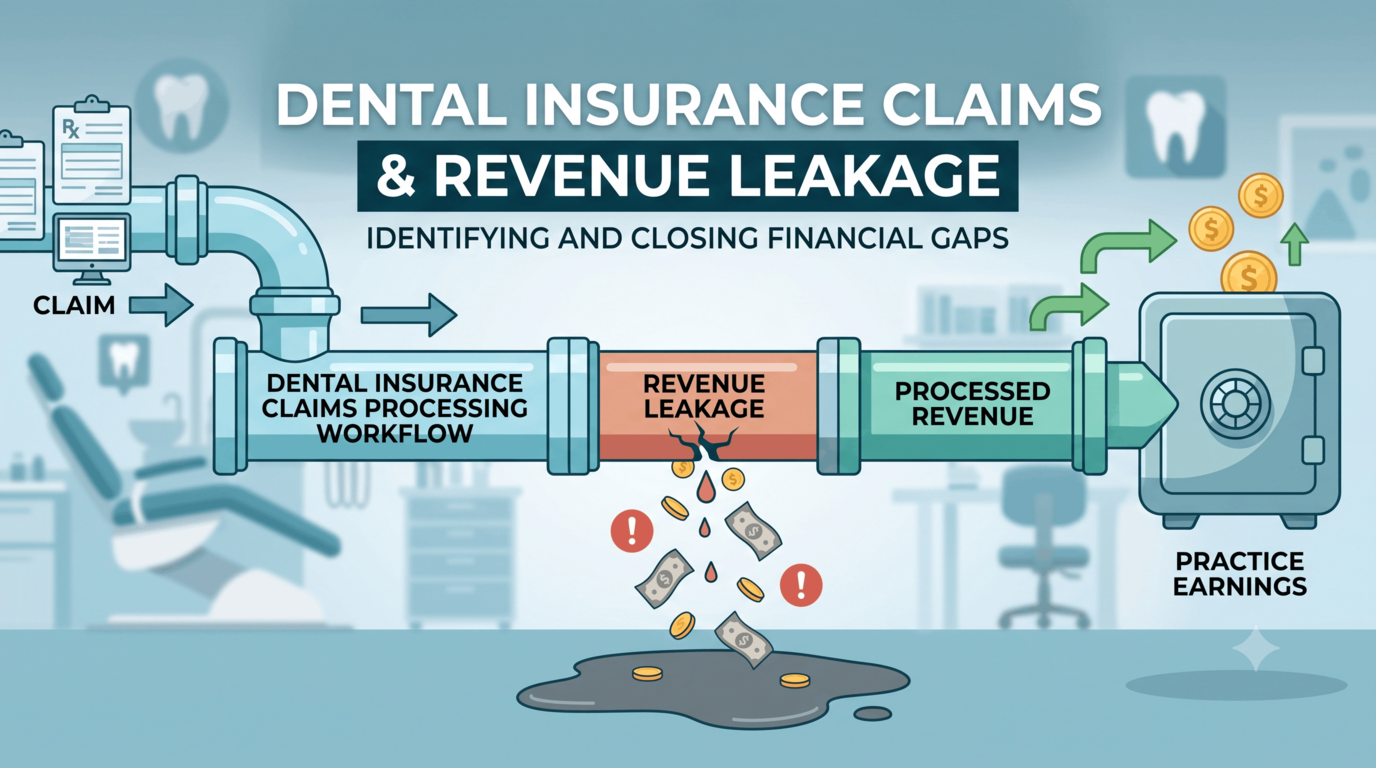
Ask a clinic owner how insurance is going and you will usually hear about rejections. Rejections are visible, they arrive with a reason attached, and somebody deals with them.
The money that actually goes missing is quieter than that. It is revenue the clinic earned, was entitled to, and simply never collected — not because an insurer refused, but because nobody noticed in time. Each individual instance is small enough to shrug at. Totalled over a year, it is frequently the largest single leak in the practice.
Here are the five places it happens, and how to find each one in your own data.
1. Approvals that expired before the treatment happened
An approval is granted, the patient books for three weeks later, the appointment slips twice, and by the time the crown is fitted the approval has lapsed. The work has been done. The material is spent. The claim will not be paid.
This is the most infuriating category because the loss is total and entirely preventable. The failure is one of timing, not clinical judgement.
How to find it: count treatments delivered in the last quarter where the approval expiry date preceded the treatment date. Multiply by the average value. Clinics running this for the first time are usually unpleasantly surprised.
The fix is structural: approval validity has to be visible before the appointment, on the schedule and the patient record, with an alert raised ahead of expiry — not discovered at billing.
2. Procedures that were performed but never claimed
A patient comes in for two procedures. One is charted, invoiced and claimed. The second — added mid-appointment because the dentist saw something while they were in there — gets charted clinically and never makes it onto a claim.
This happens most in longer appointments and in multi-procedure visits, which are exactly your highest-value slots.
How to find it: reconcile procedures recorded in the clinical chart against procedures appearing on submitted claims for the same period, for insured patients. The gap is your answer.
The fix: the claim should be built from the charted procedures rather than re-entered from them. Any workflow that requires a person to copy from the clinical record into a claim form will leak, no matter how careful they are.
3. Patients treated past their annual limit
Every insured patient has a ceiling. Halfway through the year, some of them have used most of it — and neither the patient nor your front desk knows exactly where they stand.
Treat past the limit and one of two things happens: you write it off, or you have an awkward conversation with a patient who was never told and reasonably believed they were covered. Both are expensive; the second also costs you the relationship.
How to find it: run utilisation against limits for your active insured patients. Look for anyone above roughly 80% — that is your at-risk list.
The fix: remaining limit should be on screen when the appointment is booked, so the conversation happens before treatment, when it is still a normal financial discussion instead of a complaint.
4. Claims that aged quietly past follow-up
A claim is submitted. Nobody rejects it. Nobody pays it either. It sits.
Without an ageing view, an unpaid claim is indistinguishable from a paid one — both are simply "submitted". Six months later it is beyond the insurer's window and effectively uncollectable.
How to find it: a claims ageing report, bucketed by 30, 60, 90 and 120-plus days. Everything beyond your insurers' normal settlement period needs a name against it today.
The fix: ageing has to be a standing weekly review with an owner, not an investigation someone launches when cash flow feels tight.
5. Contracts nobody ever measured
Not every insurer is worth the same to you. Some settle in three weeks, some in three months. Some reject 5% of claims, some reject a quarter. Some pay well on the procedures you actually do most.
Clinics routinely renew contracts on relationship and habit because they have no per-company numbers to negotiate with.
How to find it: rejection rate, average settlement time and average claim value, broken down per insurance company, over twelve months.
The fix: walk into renewal with that table. It changes the conversation entirely.
The pattern behind all five
| Leak | Root cause | What makes it visible |
|---|---|---|
| Expired approvals | Validity checked at billing, not booking | Expiry alerts before the appointment |
| Unclaimed procedures | Claim re-entered from the chart by hand | Claim built from charted procedures |
| Limits exceeded | Remaining balance invisible at booking | Utilisation against limit on screen |
| Aged claims | "Submitted" treated as an end state | Ageing report with owners |
| Weak contracts | No per-insurer performance data | Company performance reporting |
Every one of them is an information-timing failure. The clinic had the data; it simply was not in front of the person making the decision at the moment they made it. That is why hiring another administrator rarely fixes this — the new person inherits the same blind spots.
How PDental handles it
PDental keeps insurance inside the same record as the treatment, which removes most of these gaps by construction. Insurance company profiles, per-patient coverage periods and procedure mapping sit alongside the patient's chart and ledger, so an approval, a limit and a claim are all attached to the treatment that generated them.
On the visibility side, the reporting is deliberately specific rather than a single generic "insurance report": approval expiry, claims ageing, utilisation, per-patient insurance limits, company performance, and insurance revenue against patient revenue. Each one maps to a leak above, which means the weekly review can be a short pass over five named reports instead of a data-gathering project.
Because claims are constructed from charted procedures rather than retyped, the second leak — the one clinics find hardest to believe until they measure it — largely stops occurring.
Where to start
Do not try to fix all five at once. Run the arithmetic on each for a single quarter and rank them by value. Almost every clinic finds one dominant leak, and it is rarely the one they assumed. Fix that, put a standing weekly review against claims ageing, and measure again next quarter.
The goal is not perfection. It is making sure the money you already earned actually arrives.
Frequently asked questions
Why do insurance losses go unnoticed for so long?
Because each individual loss is small and arrives separately from the treatment that caused it. An expired approval, one unclaimed procedure and one aged claim look like three unrelated administrative slips rather than a pattern. They only become visible when you total them by cause over a period, which is exactly what most clinics never do.
What is the single highest-value insurance report for a clinic owner?
A claims ageing report. It shows the money you have already earned, already submitted and not yet been paid, sorted by how long it has been outstanding. Anything sitting beyond your insurers' normal settlement period is either being disputed or has been forgotten, and both need someone's name against them.
How can we stop treating patients on approvals that have already expired?
The check has to happen before the appointment rather than at billing. That means approval validity is visible on the patient record and the schedule, with an alert raised in advance of expiry, so the front desk can rebook or renew instead of discovering the problem after the procedure is done.
Should we track insurance performance per company?
Yes. Rejection rates, settlement times and average claim values differ significantly between insurers. Tracking them per company turns your contract renewals from a conversation about goodwill into one about documented performance, and tells you which contracts are genuinely worth their administrative load.