
Dental Inventory: Cash Sitting on a Shelf With an Expiry Date
Stock fails two ways — running out mid-procedure, and writing off material that expired. They have different causes and different fixes. Here's how to tell which one is costing you.
Published
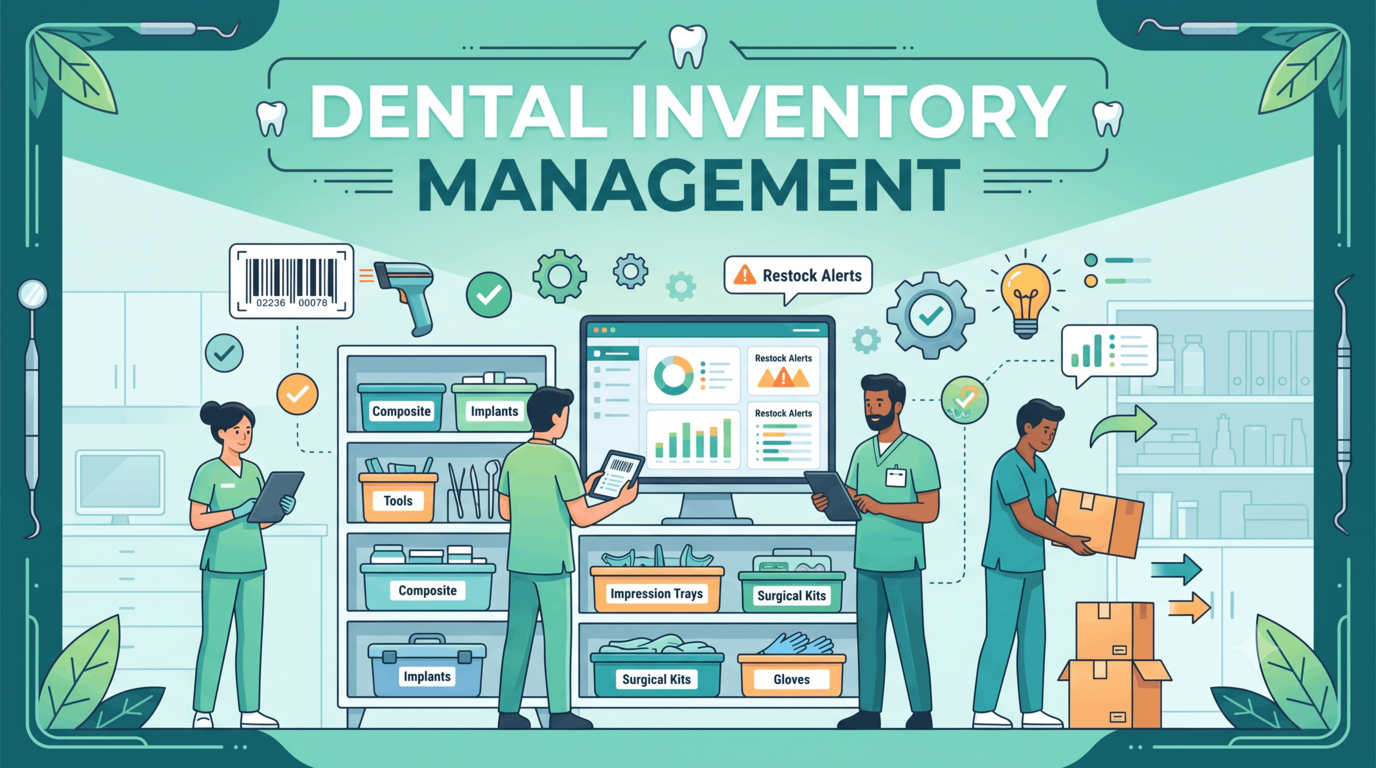
Inventory does not feel like a financial problem. It feels like a cupboard.
But every box on that shelf is cash you have already spent, sitting idle, with a date after which it becomes a write-off. A clinic carrying more stock than it needs has quietly converted working capital into composite — and a clinic carrying too little discovers it in the worst possible way, mid-procedure, with a patient in the chair.
Two failure modes, two different fixes
Almost every stock problem is one of these, and clinics routinely apply the wrong remedy.
Running out is a visibility problem. Nobody knew the level was low because nobody looked, or because the person who always checks was on leave. The instinctive fix — order more of everything — swaps this failure for the other one.
Writing off expiry is a forecasting problem. You ordered based on what looked low rather than what actually gets used, so slow-moving items accumulate until their dates pass.
Ordering more solves the first and worsens the second. That is why "we just keep more stock now" tends to move the loss rather than remove it.
Why drawer-checking cannot scale
Every clinic starts with someone competent who knows what is running low. This works, and it keeps working right up until one of three things happens: the clinic gets busy enough that checking slips, that person takes leave, or a second branch opens.
The second branch is the usual breaking point. Two locations have different case mixes and therefore different consumption rates, so the intuition built at the first branch is actively wrong at the second. Meanwhile a single pooled stock figure hides both problems at once — the branch about to run out and the branch sitting on six months of supply average into a number that looks fine.
Consumption is the number everything else depends on
If material use is linked to the procedures performed, you stop guessing. You know that a given month of treatment consumes roughly a given quantity of each material, and reordering becomes arithmetic rather than intuition.
That single link makes four things possible:
- Forecasting — order against expected consumption, not against how the drawer looks.
- Expiry avoidance — order quantities that will actually be used before their dates.
- True procedure costing — you finally know the material cost of a crown, not just its price.
- Detecting loss — when consumption and stock movement disagree, something is being wasted, mis-recorded or walking out.
Most clinics never reach point three, which is a shame, because knowing the real material cost per procedure changes pricing conversations and identifies the treatments that look profitable and are not.
What to watch, and how often
| Check | Frequency | What it catches |
|---|---|---|
| High-value & short-dated items | Weekly | Discrepancies while the cause is still recallable |
| Full count | Monthly | Drift, waste, recording errors |
| Expiry horizon (next 90 days) | Monthly | Write-offs while they are still usable |
| Low-stock forecast | Continuous | Stock-outs before they happen |
| Stock value | Monthly | Capital tied up on the shelf |
| Supplier performance | Quarterly | Late or short deliveries you have absorbed silently |
The last row is routinely skipped. Clinics negotiate with suppliers on price alone, having never measured which ones deliver late, deliver short, or substitute without asking. Those failures cost real money — usually as an emergency order at a worse price — and they never appear on an invoice.
The order that arrives late is a clinical problem
A stock-out is not an administrative inconvenience. It means rescheduling a patient, losing the chair time, and explaining a delay that sounds — to the patient — like disorganisation.
That is why lead time belongs in the reorder threshold. A material that takes two weeks to arrive needs a trigger point two weeks earlier than one available next day. Clinics that set a single flat "minimum quantity" across every item are correct for the average case and wrong for exactly the items that hurt most.
How PDental handles it
PDental keeps materials, warehouses, suppliers and purchase orders in one chain, and — critically — links material consumption to the procedures performed. That link is what turns everything downstream from guesswork into arithmetic.
The reporting is deliberately split by failure mode rather than lumped into one stock screen: low-stock forecasting for the stock-out risk, expiry and damage reports for the write-off risk, stock movement and stock value for what you hold and what it is worth, and supplier performance for the contracts behind it. Warehouse utilisation and per-branch scoping mean a two-branch group sees each location's real position instead of a pooled average that describes neither.
Because procedures, materials and invoices are in the same system, the material cost of a treatment is available rather than reconstructed — which is what makes procedure-level costing possible at all.
Where to start
Do not start with a full stock take. Take your ten highest-value materials, and for one month record what you actually consumed against what you ordered.
That short exercise usually surfaces one dominant pattern — over-ordering on a slow mover, a supplier with a longer real lead time than assumed, or a material being consumed far faster than the case volume suggests. Fix that one, then widen the net.
The goal is not a perfect count. It is that the cupboard stops being a place where cash quietly goes to expire.
Frequently asked questions
How often should a dental clinic count stock?
Count high-value and short-dated items weekly, and everything else monthly. The point of a weekly count is not accuracy for its own sake — it is catching a discrepancy while you can still remember what caused it. A quarterly count tells you something is wrong but never why.
Why does material expire even in a busy clinic?
Because ordering is usually driven by what looks low rather than by what gets used. A drawer that looks empty gets reordered whether or not the last order is still sitting behind it, and slow-moving items accumulate quietly until someone checks a date. Consumption-based forecasting removes the guesswork that causes it.
Should inventory be tracked per branch or centrally?
Per branch, with a group-level view on top. Branches have different case mixes and therefore different consumption, so a single pooled figure hides both the branch that is about to run out and the one holding six months of stock. Central-only tracking is the most common reason a second location develops a stock problem.
What is the most useful inventory report for a clinic owner?
Low-stock forecasting based on actual consumption, because it is the only one that prevents a problem rather than describing one. Expiry and stock-value reports matter too, but they tell you what already went wrong; a forecast tells you what is about to.