
WhatsApp or SMS? Choosing the Channel Your Patients Actually Read
Channel choice is an operational decision with measurable consequences, not a preference. When WhatsApp wins, when SMS is the right fallback, and why a delivery log settles arguments.
Published
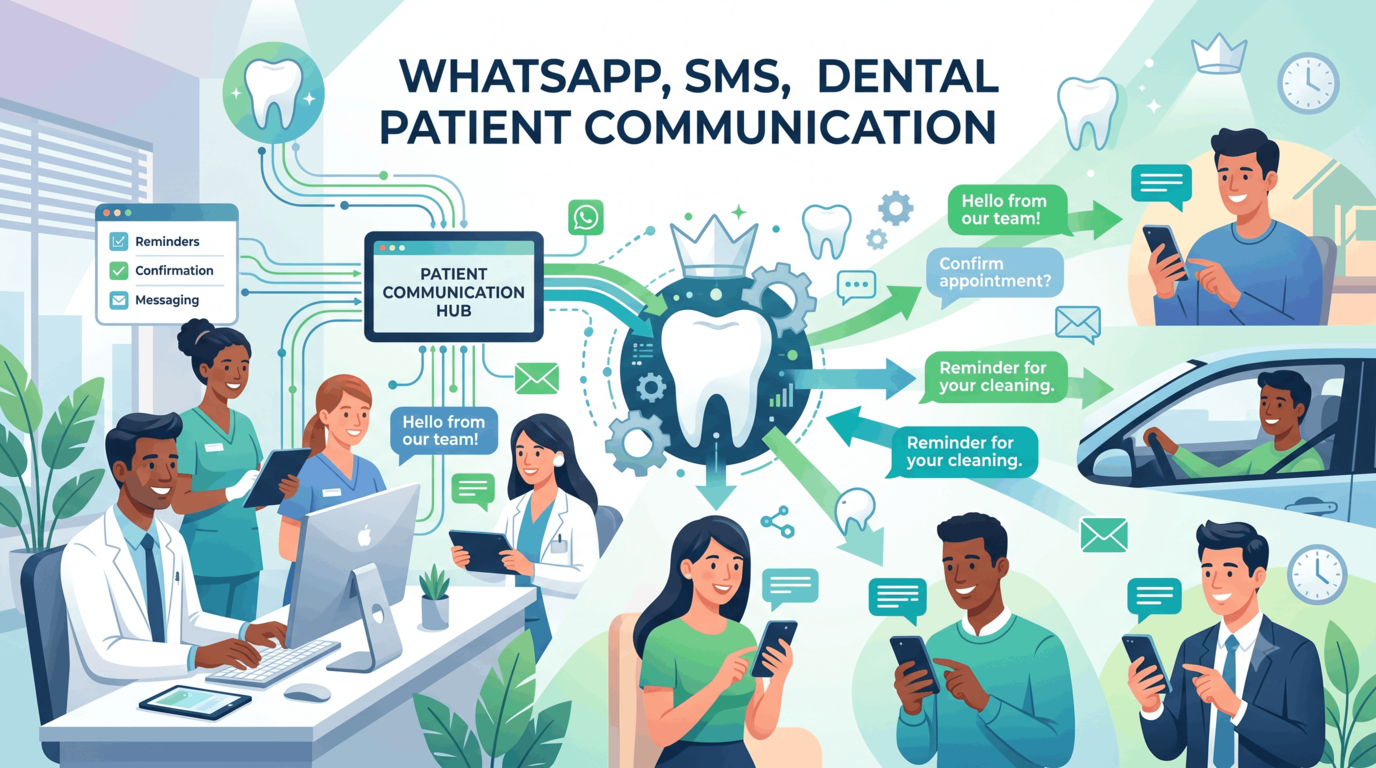
Every clinic sends appointment reminders. Far fewer can tell you what proportion of them were read.
That gap is the whole subject. A reminder that is technically sent but never seen has the same operational value as no reminder at all — you paid for it, it appears in your process documentation, and the chair still sits empty. Channel choice is not a matter of preference. It determines whether the message does its job.
Read rate is the only metric that matters
Send rate is easy to measure and tells you almost nothing. What you need is some approximation of whether the message reached a human.
In most Gulf and wider MENA markets, WhatsApp is read within minutes and SMS frequently is not opened at all. That gap is large enough that it swamps every other consideration — message wording, send timing, tone. Getting the channel right is worth more than any amount of copywriting on the wrong one.
But "use WhatsApp" is too simple as a policy, because it fails for a predictable set of patients on a predictable set of days.
Where each channel wins
| SMS | ||
|---|---|---|
| Read rate | High | Variable, often low |
| Patient can reply | Yes — confirmation becomes possible | Not practically |
| Needs an app | Yes | No |
| Needs data | Yes | No |
| Older patients | Sometimes not installed | Universal |
| Delivery certainty | Good, but not guaranteed | Good |
| Rich content | Images, documents, links | Text only |
| Best used for | Confirmations, reminders, follow-up | Fallback, and patients without WhatsApp |
The practical policy is: WhatsApp by default, SMS as fallback, and let the patient's own history decide. A patient who has never engaged on WhatsApp should get SMS. A patient whose WhatsApp message failed to deliver should get an SMS rather than nothing.
Standardising on the cheaper channel to save a small per-message cost is a false economy when a single recovered appointment is worth more than a year of messaging fees.
The reply is the point
The most underrated advantage of WhatsApp is not the read rate. It is that the patient can answer.
A reminder that asks the patient to call the clinic to confirm adds friction and will mostly be ignored — not from indifference, but because calling during working hours is inconvenient. A message they can reply to with a single word converts far better.
And a reply is a genuinely different signal from silence. Silence means the message may not have been read, the patient may have forgotten, or they may be planning not to come. A reply tells you which. That is the difference between hoping the slot is filled and knowing it.
Which messages are worth sending
Three earn their place in almost every clinic:
- Booking confirmation, immediately. It confirms the details are right while they are still easy to change.
- A reminder 24 to 48 hours ahead. Early enough that the patient can rearrange their day, and early enough that you can refill the slot if they cannot.
- A post-visit follow-up, which doubles as the natural moment to request feedback.
Everything beyond that has to justify itself. Message fatigue is real: patients who receive too much from you stop reading all of it, including the reminder that would have saved the appointment. Every additional message type slightly devalues the ones that matter.
Consent, and why it is not just a legal question
Capture consent at registration, record it against the patient, and make opting out genuinely easy.
The regulatory argument is the obvious one. The operational argument is stronger: a patient who cannot easily stop your marketing messages will block the number. That costs you the channel entirely — including for appointment reminders, which they did want. Treating consent carelessly does not just risk a complaint, it destroys the asset.
The delivery log settles arguments
Sooner or later a patient will insist they were never told about an appointment they missed.
Without a log, this is your receptionist's memory against the patient's, which is not an argument you win, and not one worth having. With a log — what was sent, to which number, on which channel, with what delivery status — it becomes a ten-second lookup and a calm conversation.
The same log is what turns messaging from a cost into something you can manage. Delivery failures concentrated on one number format, or one channel, or one branch, are visible as a pattern rather than as isolated complaints.
How PDental handles it
PDental treats messages as a property of the event rather than a task for the front desk. Configurable message types fire on the events you choose — booking confirmation, pre-visit reminder, post-visit follow-up — across WhatsApp and SMS, so the channel decision is made by configuration rather than by whoever is at the desk.
Every message is written to a log with its delivery status, and a message log summary report turns that into a pattern view rather than a pile of individual records. Because messaging sits in the same system as the calendar and the patient file, a reminder, a cancellation, a refilled slot and a post-visit feedback request are one connected flow — see cutting no-shows for what that is worth in recovered chair time.
Feedback requests triggered after the visit feed straight into satisfaction reporting, which closes the loop between communication and the thing it was supposed to improve.
The summary
Pick the channel your patients actually read, keep the second one as a genuine fallback rather than a formality, send three message types rather than eight, take consent seriously because the alternative costs you the channel, and log everything so the question "were they told?" has an answer.
None of that is sophisticated. It is just done consistently — which is precisely what a system does better than a person with a busy front desk.
Frequently asked questions
Should a dental clinic use WhatsApp or SMS for patient messages?
Both, with WhatsApp as the default where your patients use it and SMS as the fallback. WhatsApp is read far more reliably and supports a reply, which turns a notification into a confirmation. SMS needs no app and no data connection, which makes it the right tool for older patients and for the moment WhatsApp delivery fails.
Which appointment messages are worth sending?
Booking confirmation, a reminder 24 to 48 hours before, and a post-visit follow-up. Everything beyond that needs to earn its place, because message fatigue is real — patients who receive too many notifications stop reading all of them, including the one that would have prevented a no-show.
Do we need patient consent to send appointment reminders?
Treat consent as required and record it against the patient rather than assuming it. Capture it at registration, make opting out genuinely easy, and honour it immediately. Beyond the regulatory position, a patient who cannot easily stop your messages will simply block the number, which costs you the channel for appointment reminders too.
What happens when a patient claims they were never told about an appointment?
This is exactly what a message log is for. It records what was sent, to which number, on which channel and with what delivery status, so the question becomes a lookup rather than an argument. Without one, the clinic is relying on a staff member's memory against a patient's, which is not a position you win.