
Streamlining the Front Desk: Reducing Patient Wait Times with Smart Scheduling
Long waiting room delays are the primary cause of negative patient reviews. Discover how smart appointment buffering, pre-visit check-ins, and capacity rules slash wait times and streamline reception.
Published
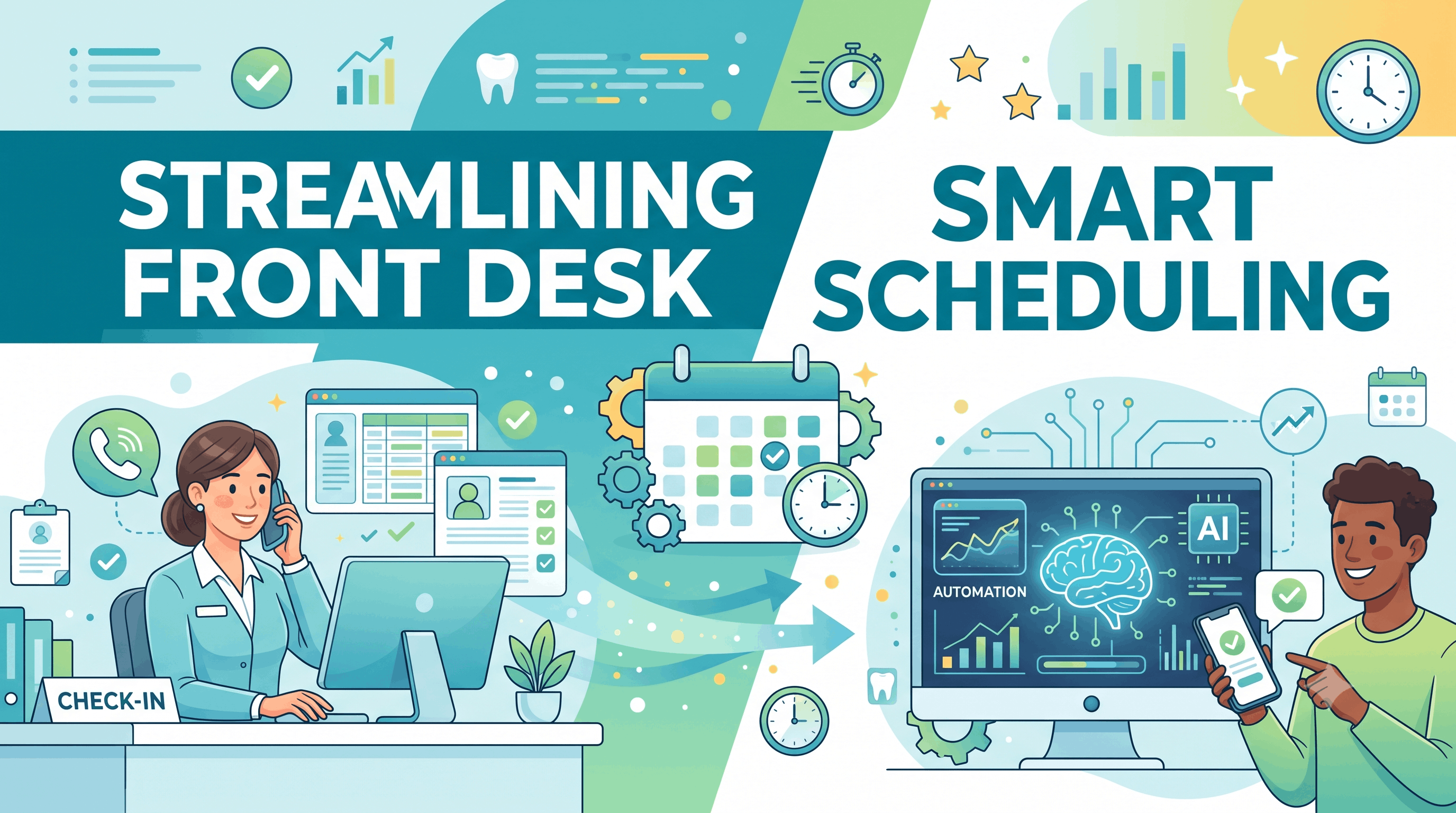
Nothing damages a dental clinic's reputation faster than a crowded waiting room and a 45-minute delay.
When patients wait past their scheduled time, anxiety mounts, front-desk staff face frustration, and the entire day's schedule cascades into chaos. Practice owners often assume the solution is simply booking fewer appointments. But cutting capacity reduces revenue.
The real solution is smart scheduling—combining dynamic appointment duration logic, pre-visit intake, and live operatory workflow tracking to streamline front desk throughput without losing revenue.
1. The Root Causes of Waiting Room Bottlenecks
Waiting room bottlenecks are rarely caused by lazy staff. They are structural defects in how appointments are built:
- Uniform Slot Defaulting: Booking a 30-minute block for a complex crown prep (which actually takes 50 minutes) and a 30-minute block for a simple checkup (which takes 15 minutes).
- The Paper Check-in Queue: Three patients arriving at 10:00 AM all trying to complete handwritten medical history forms at the single reception counter.
- Unscheduled Emergency Interruptions: Slipping an urgent toothache patient into an already tight schedule without designated buffer blocks.
- Lack of Operatory Visibility: Reception booking follow-up appointments without knowing whether Doctor is running 15 minutes behind in Room 2.
2. The Smart Scheduling Framework: 4 Operational Rules
Rule 1: Procedure-Based Duration Templates
Replace fixed 30-minute appointment slots with procedure-specific time blocks calibrated to practitioner speeds.
- Hygiene & Cleaning: 30 minutes
- Single Surface Composite Fill: 45 minutes
- Multi-Unit Crown Prep: 75 minutes (including operatory turnover)
By assigning accurate realistic durations, schedule drift is eliminated before the day starts.
Rule 2: Pre-Arrival Digital Intake
Eliminate the waiting room administrative queue entirely. By sending mobile check-in links 24 hours prior to the appointment, patients arrive with medical histories updated, insurance verified, and consent forms signed. They walk straight from reception to the operatory chair.
Rule 3: Strategic Buffer Blocking
High-performing clinics reserve strategic 15-minute "flex blocks" in late morning and mid-afternoon schedules. These buffers absorb minor procedure overruns or accommodate emergency pain consultations without delaying subsequent booked patients.
Rule 4: Live Operatory Status Tracking
Modern practice management tools provide a real-time status board visible to both reception and clinical teams:
Arrived(In Waiting Room)Seated(In Operatory)In Treatment(Procedure Underway)Dismissed / Checkout(At Reception)
This shared visibility ensures reception never sends a patient to an un-sanitized operatory or double-books a delayed doctor.
3. Comparing Traditional vs. Smart Front Desk Operations
| Operational Scenario | Traditional Schedule Approach | Smart Scheduling Approach |
|---|---|---|
| Patient Arrival | Fills 2 pages of paper forms at counter; 15-minute delay. | Arrives pre-registered on mobile; seated within 3 minutes. |
| Emergency Toothache | Squeezed in randomly; delays all subsequent afternoon patients. | Assigned to designated emergency buffer slot; zero impact on schedule. |
| Procedure Overrun | Doctor runs late quietly; reception is unaware until patient complains. | Live board flags Overrun Alert; reception notifies next patient proactively via text. |
| End of Day | Staff work 45 minutes of overtime clearing delayed chart notes. | Clinic finishes on time with balanced chair throughput. |
4. Transform Your Front Desk with PDental
PDental equips your practice with advanced smart scheduling features:
- Custom Procedure Duration Rules: Automatically adjust appointment lengths based on treatment type and specific doctor preferences.
- Digital Patient Intake & Self Check-in: Mobile-friendly forms update patient records instantly upon arrival.
- Visual Operatory Workflow Board: Track patient movement from waiting room to chair to checkout in real time.
- Smart Emergency Buffers: Protect your day from unexpected schedule disruptions.
Deliver punctual, stress-free patient experiences while maximizing your clinic’s daily chair capacity with PDental.
Frequently asked questions
Why do patient wait times build up even when appointments are pre-scheduled?
Wait times stack up due to rigid appointment duration defaults, emergency walk-ins booked without buffer logic, manual check-in administrative delays, and procedures running longer than estimated.
What is smart scheduling in a dental practice?
Smart scheduling uses procedure-based duration templates, automated buffer blocks between complex treatments, live waiting room status tracking, and digital intake to balance chair utilization and prevent schedule delays.
How do shorter waiting room times increase patient satisfaction and revenue?
Patients value punctuality. Shorter wait times produce higher patient reviews, lower appointment drop-out rates, higher punctuality from arriving patients, and smoother clinic throughput without overtime stress.