
Patient Retention by the Numbers: Using a Built-in CRM to Drive Clinic Loyalty
Acquiring a new dental patient costs 5x more than retaining an existing one. Learn how a built-in CRM automates recall, identifies churn risks, and drives long-term clinic revenue.
Published
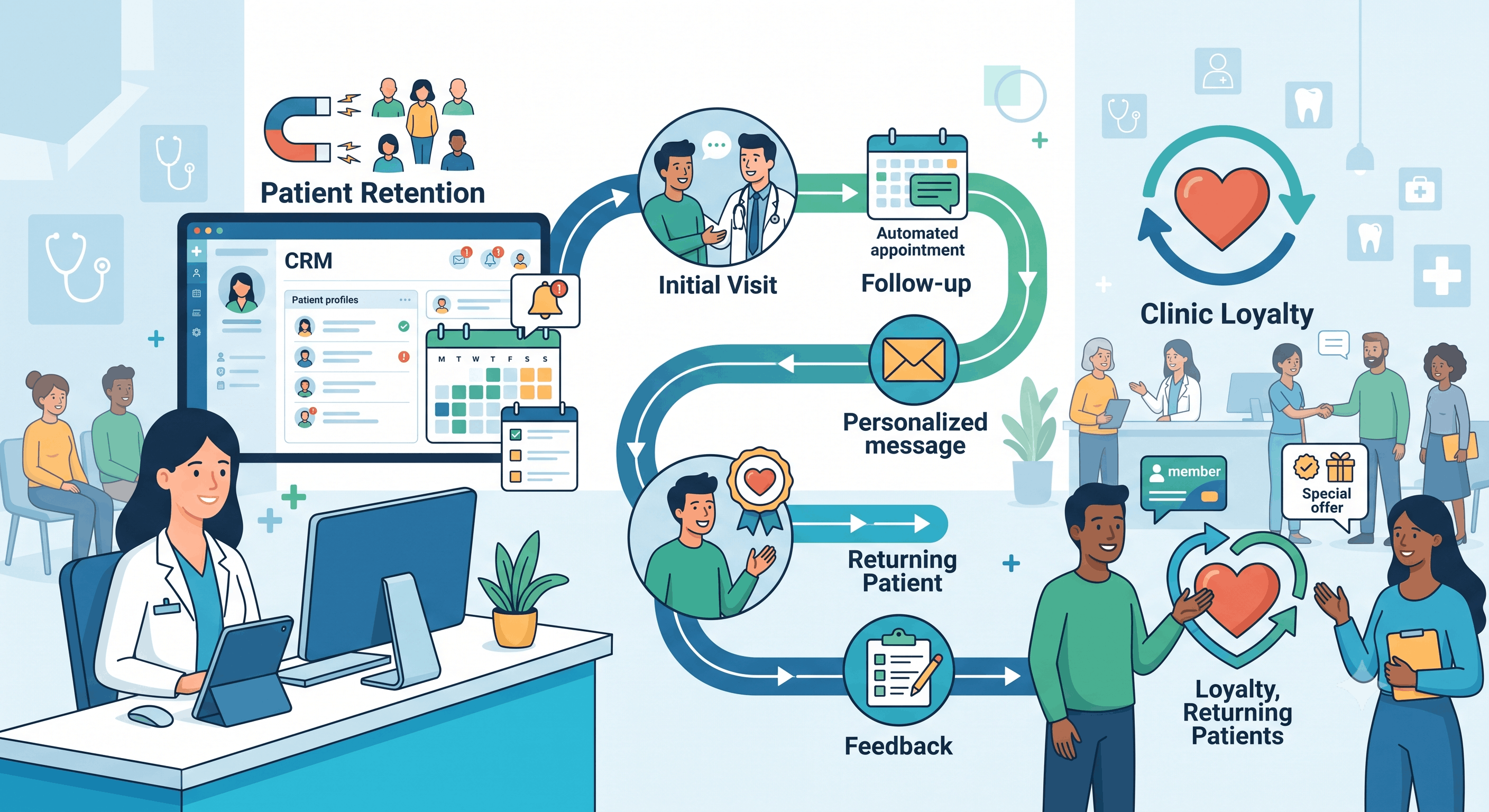
Most dental clinic owners track new patient inquiries closely. They review monthly marketing spend, monitor lead conversion, and celebrate spikes in initial consultations.
However, the real financial engine of a thriving dental practice is not acquisition—it is retention.
Acquiring a new patient can cost five to seven times more than keeping an existing one active. When a patient finishes their initial treatment plan and vanishes from your calendar for eighteen months, the true cost is not just a missed $100 hygiene visit; it is the loss of their lifetime value ($3,000–$10,000+ in restorative, cosmetic, or family care over five years).
Without a structured, built-in CRM system, patient retention relies on paper notes, memory, or sporadic front-desk phone calls. Here is how leading clinics use data-driven CRM workflows to turn drop-off into long-term loyalty.
1. The Financial Reality: Acquisition vs. Retention Metrics
To understand why retention drives bottom-line profitability, consider two fundamental metrics:
- Customer Acquisition Cost (CAC): Total monthly marketing spend divided by new patients acquired.
- Patient Lifetime Value (LTV): Average annual spend per patient multiplied by average tenure in years.
When a clinic focuses exclusively on acquisition, it constantly refills a leaky bucket. If 30% of your active patient base stops returning every year, your marketing budget is simply working to keep revenue flat.
A built-in CRM turns retention into a measurable operational pipeline by tracking key indicators:
- 6-Month Recall Rate: Percentage of eligible patients who rebook within 180 days of their last hygiene appointment.
- Treatment Plan Follow-up Rate: Percentage of presented, unaccepted treatment plans re-engaged within 30 days.
- Churn Risk Ratio: Patients with no upcoming appointment and no contact within 9+ months.
2. Why Generic CRMs Fail Dental Practices
Many practice managers try connecting third-party marketing tools (like HubSpot or generic spreadsheets) to their clinic. This creates immediate operational friction:
- Disconnected Clinical Records: A general CRM does not know if a patient has an outstanding crown prep, periodontitis recall requirements, or an unbilled balance.
- Double Entry Overhead: Reception staff must manually update lead statuses in two separate software systems.
- Impersonal Outreach: Generic email blasts lack specific context, making automated messages feel spammy rather than clinical.
A built-in dental CRM solves this by sourcing data directly from the patient’s clinical file and appointment ledger.
3. The 3 Core CRM Workflows That Drive Retention
Workflow A: Automated Preventive Hygiene Recall
The foundation of patient retention is the 6-month hygiene recall.
Rather than having reception manually comb through end-of-month lists, an integrated CRM uses automated rules:
- 30 Days Before Recall: Automated WhatsApp or SMS reminder highlighting the importance of regular checkups.
- 14 Days Before Recall: One-click booking link allowing the patient to pick an open chair time.
- 7 Days Post-Due Date: High-priority task created for reception to make a personalized follow-up call if unbooked.
Workflow B: Unaccepted Treatment Plan Nurturing
Patients frequently delay major restorative or cosmetic treatments due to budget concerns, anxiety, or scheduling conflicts. In standard clinics, unaccepted treatment plans are buried in patient charts.
An integrated CRM organizes unaccepted care into a visual follow-up board:
- Categorized by treatment urgency (e.g., endodontic vs. elective whitening).
- Structured follow-up prompts for reception at 7-day and 21-day intervals.
- Educational content delivered automatically to help patients understand treatment benefits.
Workflow C: Re-activating Lapsed Patients
Patients who have not visited in 12 to 24 months are not lost—they are dormant. Re-engaging lapsed patients requires tailored messaging rather than generic promos.
A built-in CRM filters patients by last visit date, preferred practitioner, and historical treatment categories, sending targeted re-activation campaigns that fill empty calendar slots without extra ad spend.
4. Measuring Retention Impact in PDental
PDental integrates CRM functionality directly into your practice workflow:
- Unified Patient Timeline: View clinical notes, payment history, communication logs, and recall statuses on a single screen.
- Automated Recall Triggers: Set custom intervals for hygiene, orthodontic checkups, and post-op reviews delivered via WhatsApp or SMS.
- Retention Analytics: Track re-booking percentages, churn velocity, and recall revenue directly from your executive dashboard.
By treating patient retention as an exact science rather than an afterthought, clinics build predictable recurring revenue while delivering higher continuity of care.
Frequently asked questions
Why is patient retention more profitable than patient acquisition?
Acquiring a new patient requires marketing spend and administrative onboarding costs. Retaining an existing patient leverages an established clinical record, requires zero acquisition ad spend, and leads to higher treatment plan acceptance and organic word-of-mouth referrals.
How does a built-in dental CRM prevent patients from slipping away?
A built-in CRM tracks treatment completion, recall schedules (like 6-month hygiene visits), and past appointment intervals. When a patient reaches their expected rebooking window without an active appointment, automated recall workflows prompt follow-ups before the patient churns.
Should dental clinics use a general CRM like Salesforce or a dental-specific CRM?
General CRMs lack clinical context. A built-in dental CRM connects directly to treatment histories, per-tooth notes, outstanding balances, and appointment statuses, ensuring follow-ups are clinically relevant and operationally seamless.